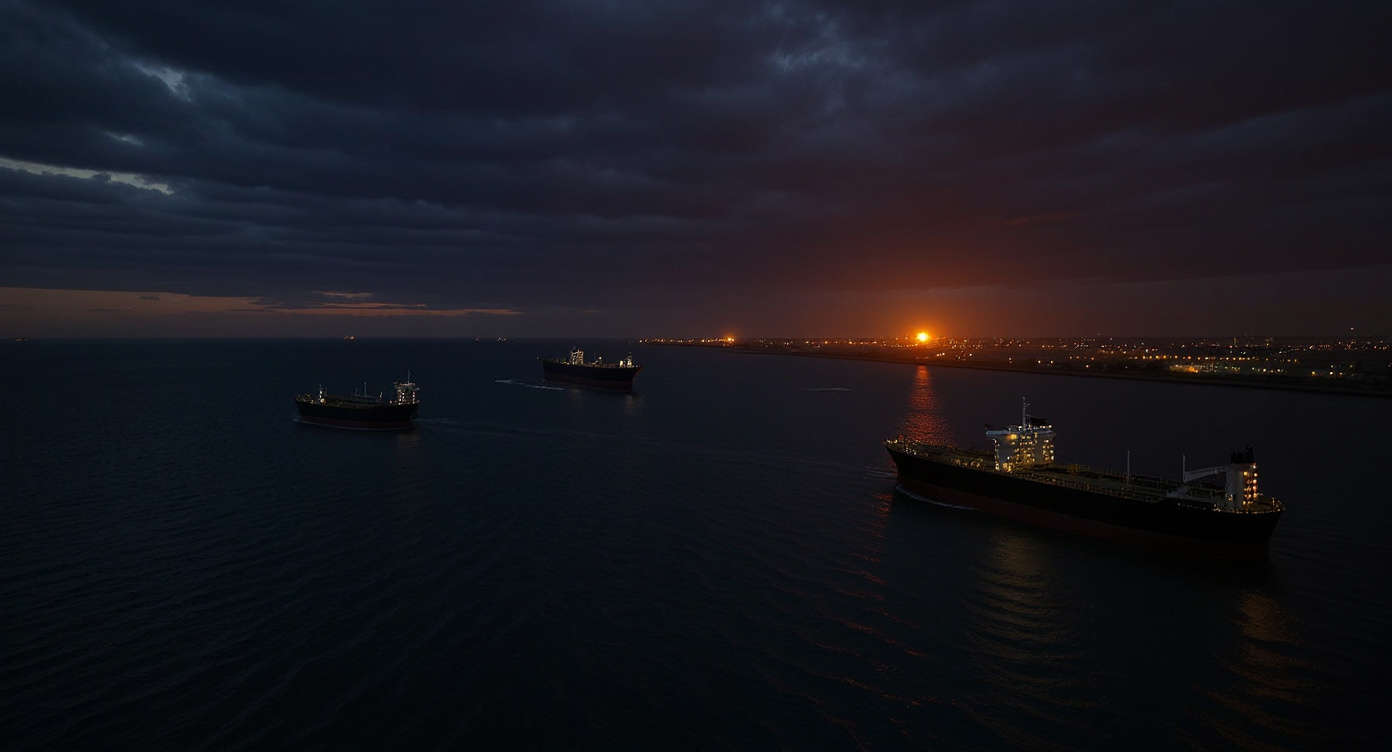
The Qatari-owned LNG tanker Al Rekayat was hit by an Iranian projectile Monday night in the Strait of Hormuz. The missile struck the engine room and started a fire — on a vessel carrying liquefied natural gas. A floating bomb, essentially, crewed by civilians who had nothing to do with the conflict between Washington and Tehran.
Within hours, the U.S. military was hitting back. Hard.
U.S. Central Command announced it had launched "a series of powerful strikes against Iran to impose heavy costs for targeting and attacking commercial shipping crewed by innocent civilians in an international waterway." By the time the operation was complete, American forces had struck more than 80 targets across Iran's southern coast with precision munitions.
The Al Rekayat wasn't the only vessel hit. The Saudi-flagged supertanker Wedyan was also struck by projectiles in the Strait on the same night. Less than 24 hours later, the Islamic Revolutionary Guard Corps attacked a third commercial ship. Three vessels in under a day, all transiting the most important oil chokepoint on the planet.
President Trump's response was characteristically direct. "We're going to win one way or the other," he said.
The target list tells you everything about how seriously the administration took this. CENTCOM forces struck Iranian air defense systems, command and control networks, coastal radar sites, and anti-ship missile capabilities. They also destroyed more than 60 small boats belonging to the IRGC in and around the Strait. Iranian state media reported explosions near Bandar Abbas, Qeshm Island, and the port of Sirik — all critical nodes in Iran's naval operations along its southern coastline.
This wasn't a symbolic response. This was methodical degradation of Iran's ability to threaten commercial shipping.
The Iranian military promised a "crushing response" to the strikes. They've been promising crushing responses for decades. What they actually delivered this week was an attack on a Qatari gas tanker and a Saudi oil ship — not exactly picking fights with the country that just flattened 80 of your military installations in one evening.
The context here matters. Washington and Tehran had agreed to a memorandum of understanding in June to end hostilities and reopen the Strait of Hormuz. The ink was barely dry. Iran's decision to fire on commercial vessels — ships belonging to Gulf Arab states, not the United States — shredded whatever remained of that agreement.
The New York Times reported that Iran insists "commercial ships sail near its shore, in a channel under Iran's control." Tehran had been demanding a "service fee" from vessels transiting the Strait — which is an interesting way to describe a protection racket enforced with anti-ship missiles.
For years, the standard American response to Iranian provocations in the Strait was a strongly worded statement and maybe a carrier group repositioning. Strategic patience, the foreign policy establishment called it. The Iranians had a different name for it: permission.
Eighty targets in one night changes that calculation. When a country fires missiles at civilian tankers in an international waterway and the response is the systematic destruction of its coastal military infrastructure, the cost-benefit analysis shifts. Every IRGC commander now knows that the next attack on a commercial vessel comes with a price tag measured in air defense batteries and port facilities.
The Strait of Hormuz handles roughly 20 percent of the world's oil supply. Letting Iran turn it into a toll road enforced by the Revolutionary Guard was never a serious option. The only question was whether the United States would act like it.
Now Tehran has its answer.