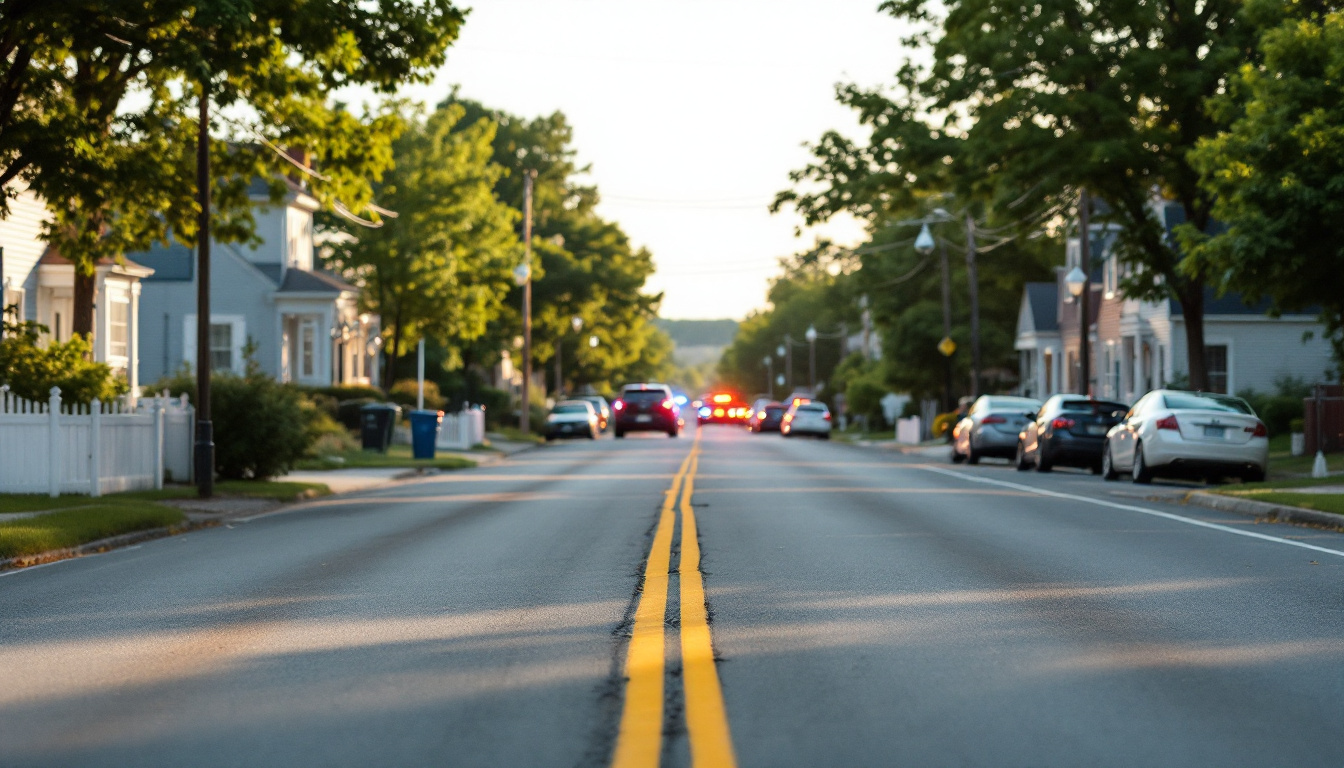
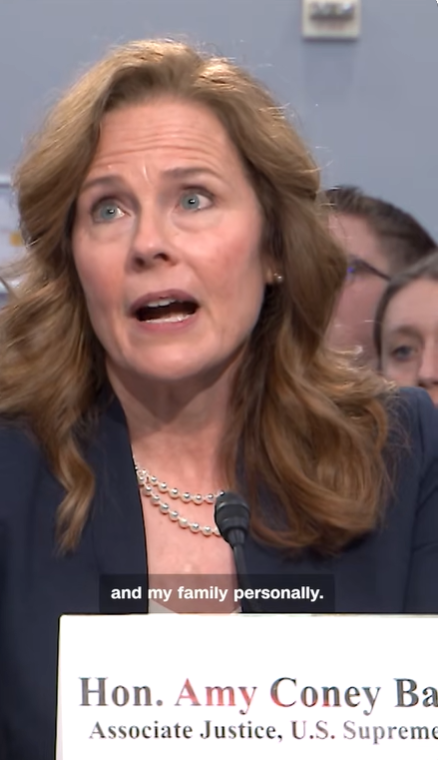
Supreme Court Justice Amy Coney Barrett told a House subcommittee on Monday that one of her teenage sons opened the front door to go out with friends and found the street packed with police cars. They were responding to a fake report of gunshots and raised voices inside her home. A SWAT-style response, triggered by a phone call that never happened, aimed at a family whose only offense is that their mother sits on the Supreme Court.
That's called swatting. And it's illegal and highly dangerous.
Barrett's testimony before the House Appropriations Subcommittee on Financial Services and General Government was unusually personal for a Supreme Court justice. She described the swatting incident in plain, specific terms: "One of my teenage sons opened the door to go out with friends and saw in our street, it was full of police cars who had responded to a false report of gunshots and raised voices in my home."
She credited the Supreme Court Police stationed outside her residence with preventing catastrophe. "I was very, very grateful that I had Supreme Court police outside my home, because they were able to stop and meet with and explain to the county police that it had been a false alarm, and so the police did not actually attempt to enter our home," Barrett said. Without that intervention, armed officers would have entered a home full of children based on a fabricated emergency.
The swatting wasn't an isolated event. Barrett also revealed that during the period of intense threats following the Dobbs leak, her security detail sent her home with a bulletproof vest. She described walking through the door with it and encountering her 12-year-old son. "I didn't expect that performing this service was going to put me in the position of explaining to my children what a bulletproof vest was and why I had to wear one," she told the subcommittee.
A 12-year-old boy standing in a doorway, looking at body armor his mother was told to wear because she did her job. That's where we are.
Barrett and Justice Elena Kagan appeared together before the subcommittee — a rare joint appearance — to make the case for the Supreme Court's fiscal year 2027 budget request of $228.4 million, up from $207.8 million appropriated for 2026. That's nearly a 10% increase, driven almost entirely by security costs. The Supreme Court Police is anticipating a 38% increase in threats for 2026 alone.
"The threat level is really high," Barrett said. Not politically high. Not abstractly high. High enough that a justice of the United States Supreme Court has to carry a bulletproof vest and explain it to her kids.
The people who spent years lecturing the country about "threats to democracy" and the sacred importance of institutional norms have been conspicuously quiet about the sustained campaign of intimidation against the judiciary. After the Dobbs decision leaked in 2022, protesters showed up at justices' homes. An armed man was arrested outside Justice Brett Kavanaugh's residence. Death threats spiked. And now, years later, the swatting attacks continue.
The budget numbers aren't the story. The story is that we've normalized a level of threat against Supreme Court justices that would have been unthinkable a decade ago, and the loudest voices about "protecting democracy" have had almost nothing to say about it.