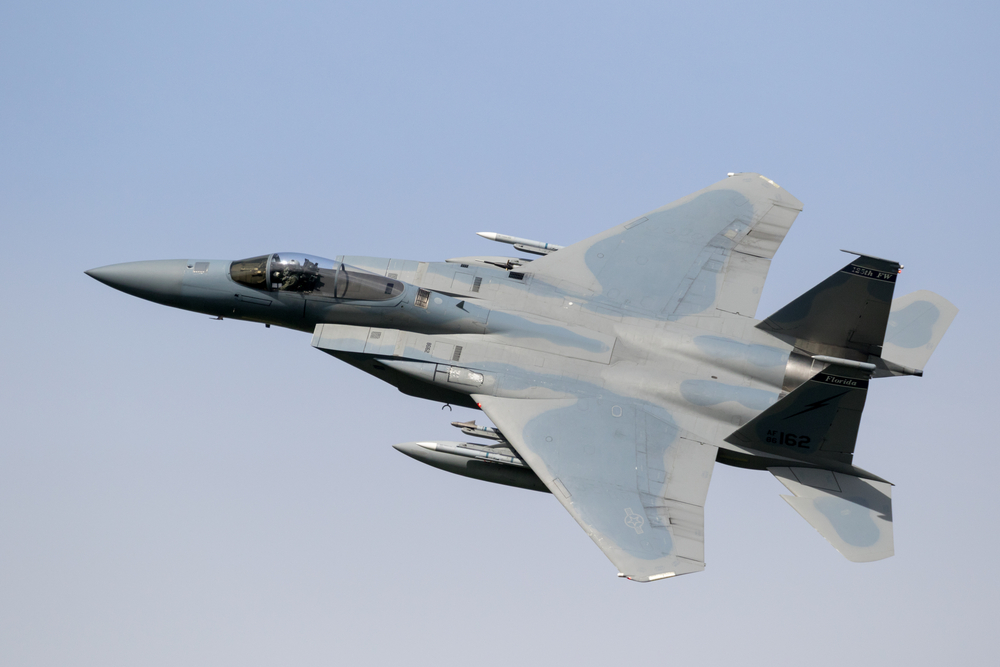
On June 19, a U.S. airstrike in northwestern Syria killed Ali Husayn al-'Ulaywi, a senior leader in the Islamic State. CENTCOM confirmed the operation. The man is dead.
That's the kind of sentence that used to appear more regularly in American military reporting. It's good to see it again.
Al-'Ulaywi's precise rank within ISIS's current structure hasn't been detailed in official statements, but senior ISIS leaders aren't foot soldiers. They're the organizational infrastructure — the planners, the financiers, the commanders who keep a near-defeated movement from fully collapsing. Eliminating them is how you turn "near-defeated" into actually defeated.
CENTCOM Commander Admiral Brad Cooper confirmed the strike and was direct about what comes next: "CENTCOM and our partners remain committed to rooting out remaining remnants of ISIS to ensure its enduring defeat."
The timing is worth understanding. By April 2026, the United States had closed its final base in Syria — ending a continuous military presence that stretched back more than a decade. Operation Inherent Resolve, the U.S.-led coalition that has been fighting ISIS since the caliphate declared itself in 2014, relocated its headquarters from Kuwait to Jordan following increased Iranian military activity in the region after the February U.S.-Israeli strikes on Iran.
In other words: the last American troops left Syria in April. A senior ISIS leader was killed in Syria in June. No permanent base required.
The argument from critics of American foreign policy has always been that the U.S. military can only operate by maintaining permanent infrastructure in every country it operates in. That argument keeps running into the reality of American capability. The reach exists. The intelligence networks exist. The precision exists. What's changed under this administration is the willingness to use them without getting bogged down in nation-building in the process.
ISIS, for its part, is not finished. The organization has declared a new phase of operations against Syria's new government under President Ahmed al-Sharaa — who joined the U.S.-led coalition against ISIS after Assad was ousted in late 2024. The political landscape in Syria shifted dramatically when Assad fell, but ISIS's ambitions didn't. The group has carried out multiple attacks since February and is actively trying to exploit the instability that followed Assad's exit.
That's what makes continued strike operations matter. ISIS without territory is still ISIS. The ideology doesn't die when the caliphate loses its last city. It reconstitutes, recruits, and waits for an opening. The way to prevent "tries again" from becoming "succeeds again" is to keep eliminating the people doing the planning.
Al-'Ulaywi was one of those people. He isn't anymore.
What this strike demonstrates is a military that has reconfigured how it operates in the region — smaller footprint, no permanent bases, but maintaining the intelligence capacity and strike capability to eliminate high-value targets wherever they surface. It's a leaner model. The results speak for themselves.
CENTCOM has been running operations against ISIS across Syria and Iraq for over a decade. The mission has been consistent: find the leadership, eliminate the leadership, disrupt the network, repeat. It doesn't produce triumphant press conferences. It produces results like June 19 — a senior ISIS commander who was alive in the morning and dead by the time the day ended.
The remnants of ISIS are still out there. CENTCOM knows where to find them.